Finishing Your Ceramic Decals – The COVERCOAT
As we discovered last week, many of you didn’t get around to reading the scintillating In-Glaze Decals – Making and Applying them, which outlines in detail the process we are using to create custom ceramic decals. If you haven’t, please do. (And thanks to those who did!)
It tells you in detail about the final step of making your custom ceramic decals, specifically the application of the covercoat which we did not yet demonstrate in class.
If you are covercoating on your own, PLEASE refer to this document to see how to do it properly, thus avoiding all kinds of heartbreak.
Ready to see some results?
In addition to continued screenprinting, we’ll cover application of our custom decals next week. If you want to have some decals ready to try out, your options for getting your decals covercoated are twofold:
- Do it at home or school in a very well ventilated place; OR
- We can arrange a time to do it at the Downtown campus on Sunday
Don’t plan on moving your covercoated decals far from the spray site for the first 24 hours. Avoid dust wherever you spray and dry your decals!
A note re: timing
Allow TWO FULL DAYS from the moment the Krylon Kamar Varnish touches your decal paper to when you would like to fire. It takes at least 24 hours for the varnish to dry (48 hours and 2 coats are preferable) and another 24 hours for the decal to dry on the ceramic piece after application.
Decalomania! Recap
So far, we’ve covered three processes:
- Collaging with commercial ceramic decals
- Screenprinting custom decals for ceramic application (to be fired)
- Screenprinting custom decals for metal, wood or glass (to cold cure with acrylic varnish application)
What you should know at this point:
- The anatomy of a decal generally
- How to apply commercial decals to ceramic ware and why you shouldn’t overlap decals without firing in between
- The difference between onglaze and inglaze decals
- Basic screenprinting process from coating the screen to cleaning it when you’re done
- What’s in the ceramic ink we’re using and why it “works”
Final Thought: Supplies
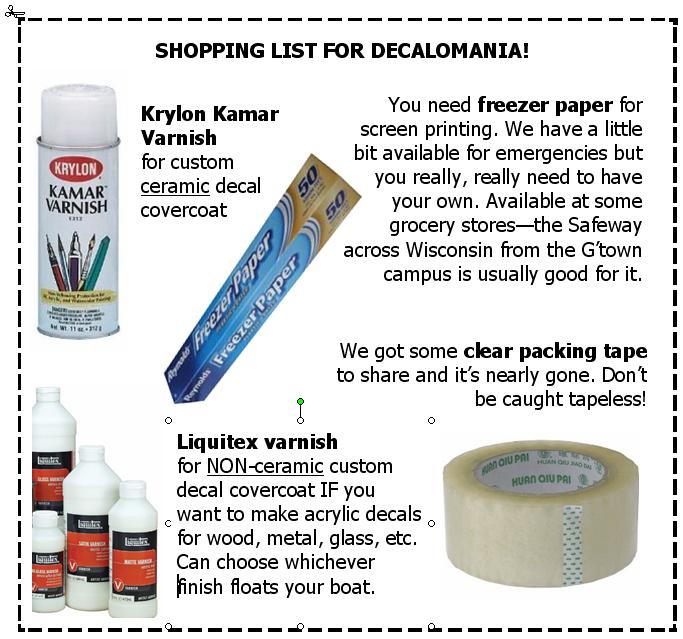
We bought some screen printing and covercoating supplies to help us get started, and those of you who were a little wobbly on supply set-up (tape, mylar, etc.) were graciously supported by your classmates. Great! But you will need to make sure you are personally well supplied for items you will need for screenprinting and covercoating. You can buy your own or arrange to share with your classmates, but please don’t rely on your instructors for the items in the Visual Shopping Guide below. If you have any questions about where to get anything from tabs to Krylon, email Amanda or Tamara!

 Decalomania!